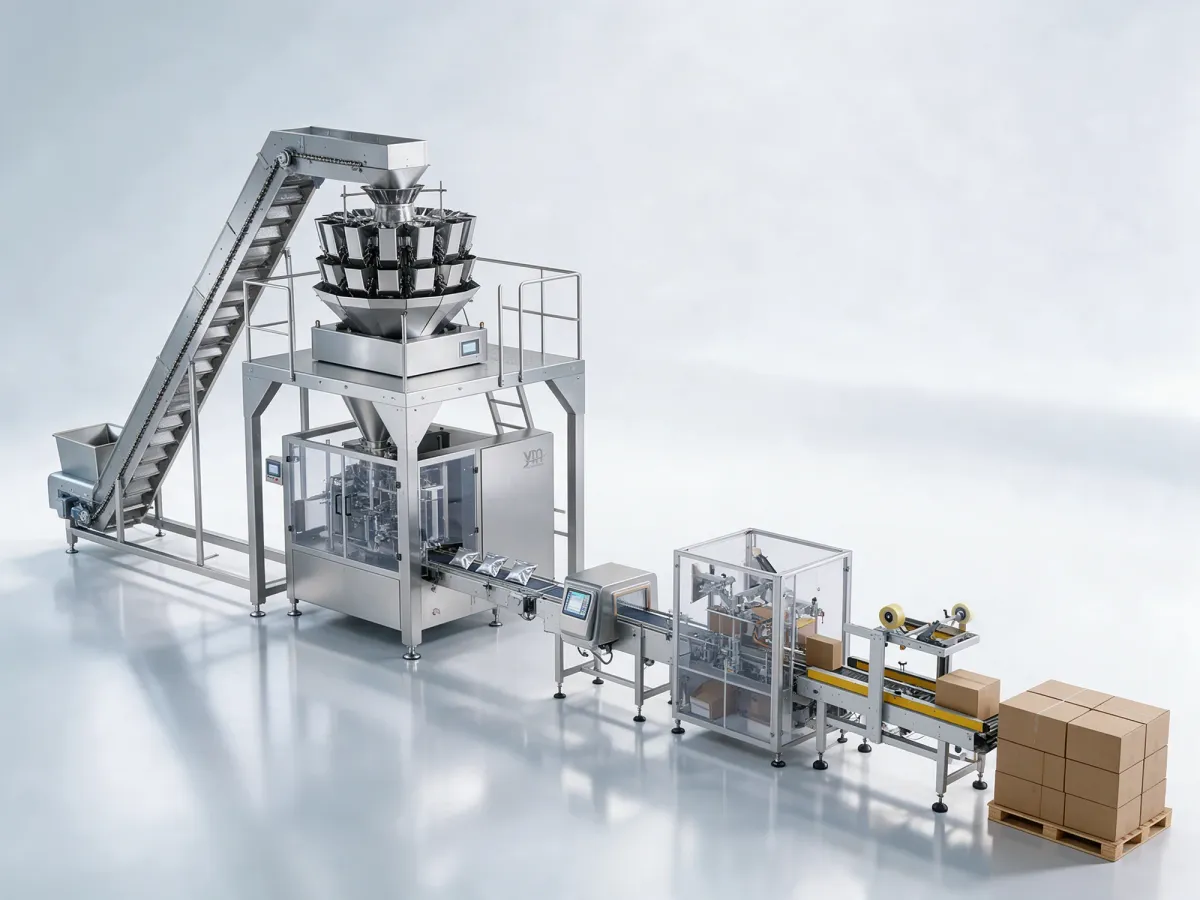
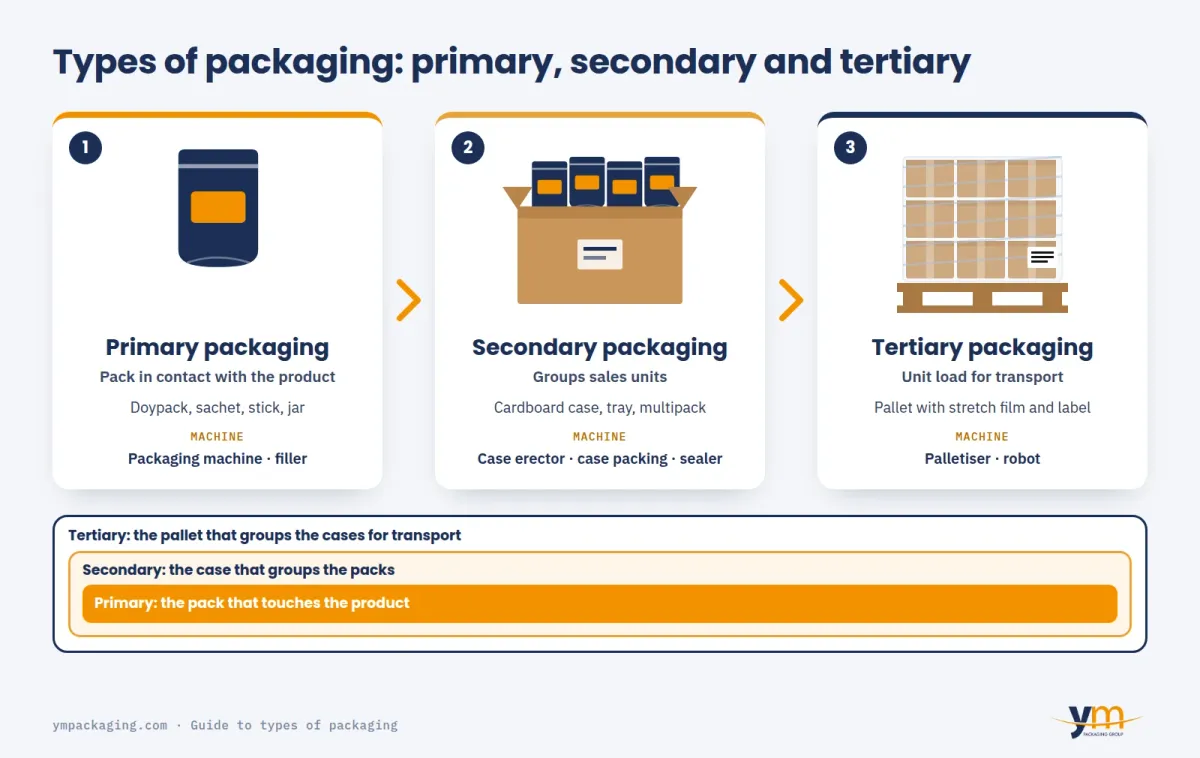
There are three types of packaging according to their function: primary packaging is in direct contact with the product, secondary packaging groups several sales units and tertiary packaging prepares the goods for transport. Together they form the primary, secondary and tertiary packaging system that leaves every packaging line.
Box and logistics suppliers usually explain it from the material. Here we explain it from the machine: which equipment forms, fills and closes each type of packaging on a real line, from the packaging machine to the palletiser, with examples from the food industry.
Primary packaging
Primary packaging is the pack that touches the product. It contains it, protects it from air, moisture or light, carries the information for the consumer (brand, ingredients, batch, best-before date) and is the unit that is bought and opened at home. That is why it is the type of packaging that most affects shelf life and brand image.
Examples of primary packaging in food:
- Doypack pouch with zipper for coffee, nuts or pet food.
- Single-dose sachet or stick for sugar, salt, sauces or supplements.
- Pillow or flat-bottom bag for snacks, pulses or frozen food.
- Flow pack for bakery products, bars or single items.
- Jar, bottle or jerrycan for spices, protein powder or liquids.
- Large-format bag for flour or animal feed.
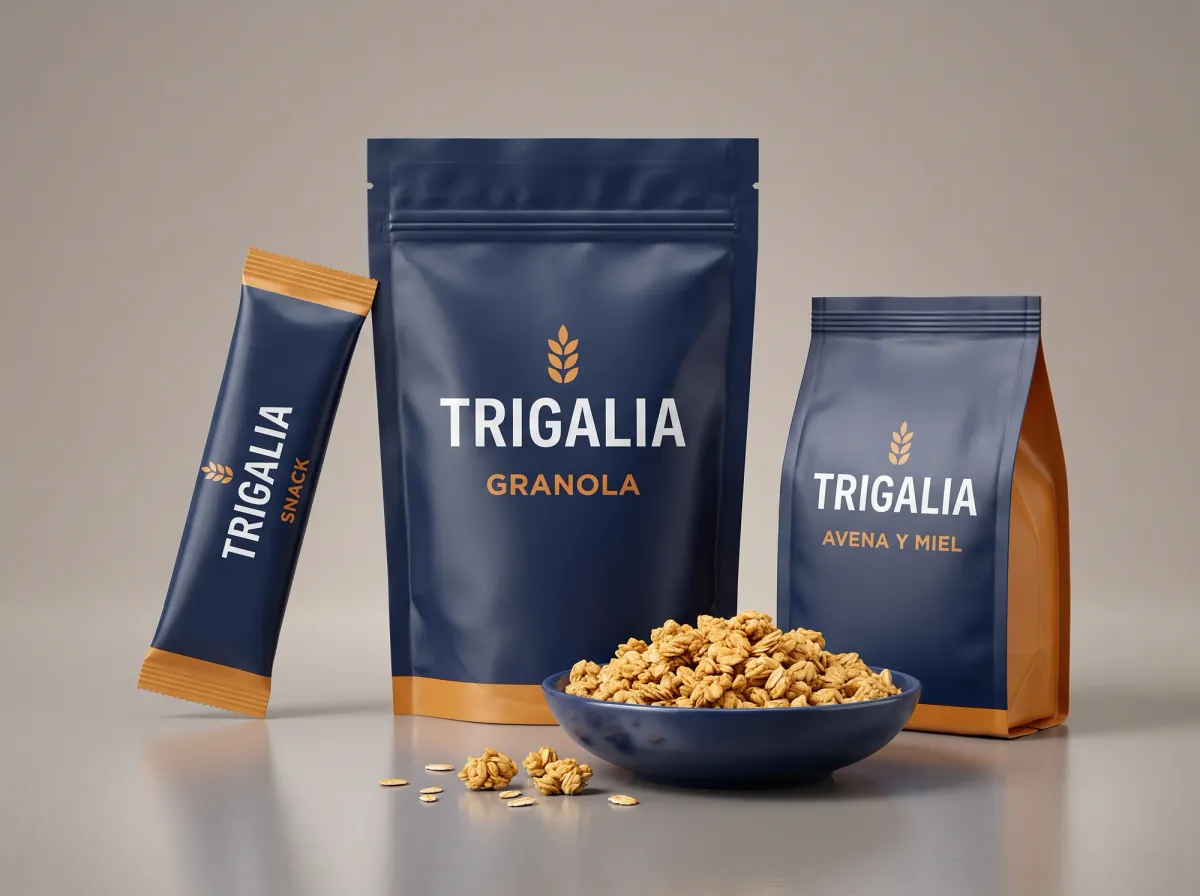
Which machines make primary packaging. It is the job of the packaging machine, which forms or picks up the pack, fills it with the exact dose and seals it:
- Vertical packaging machines form pillow bags, flat-bottom bags, sachets and sticks from the reel.
- Horizontal packaging machines make or fill premade pouches, such as the doypack pouch with zipper or spout.
- Flow wrapping machines wrap each item in a horizontal pillow pack.
- Jar filling machines fill and close jars, bottles and jerrycans.
The doser sits in front of the packaging machine: a multihead weigher for solids and granules, an auger for powders or a pump for liquids. All this equipment makes up our primary packaging machinery.
Secondary packaging
Secondary packaging groups several primary packs into a larger unit: a cardboard case, a tray, a multipack or a shelf-ready display case that goes straight onto the supermarket shelf. It protects the packs during distribution, makes them easy to count and restock, and often also communicates the brand at the point of sale.
Examples of secondary packaging:
- Cardboard case with 12 doypack pouches of coffee.
- Display case with 50 sugar sticks for the hospitality sector.
- Tray with several bags of snacks.
- Case with an inner bag for bulk product, such as nuts or frozen food.
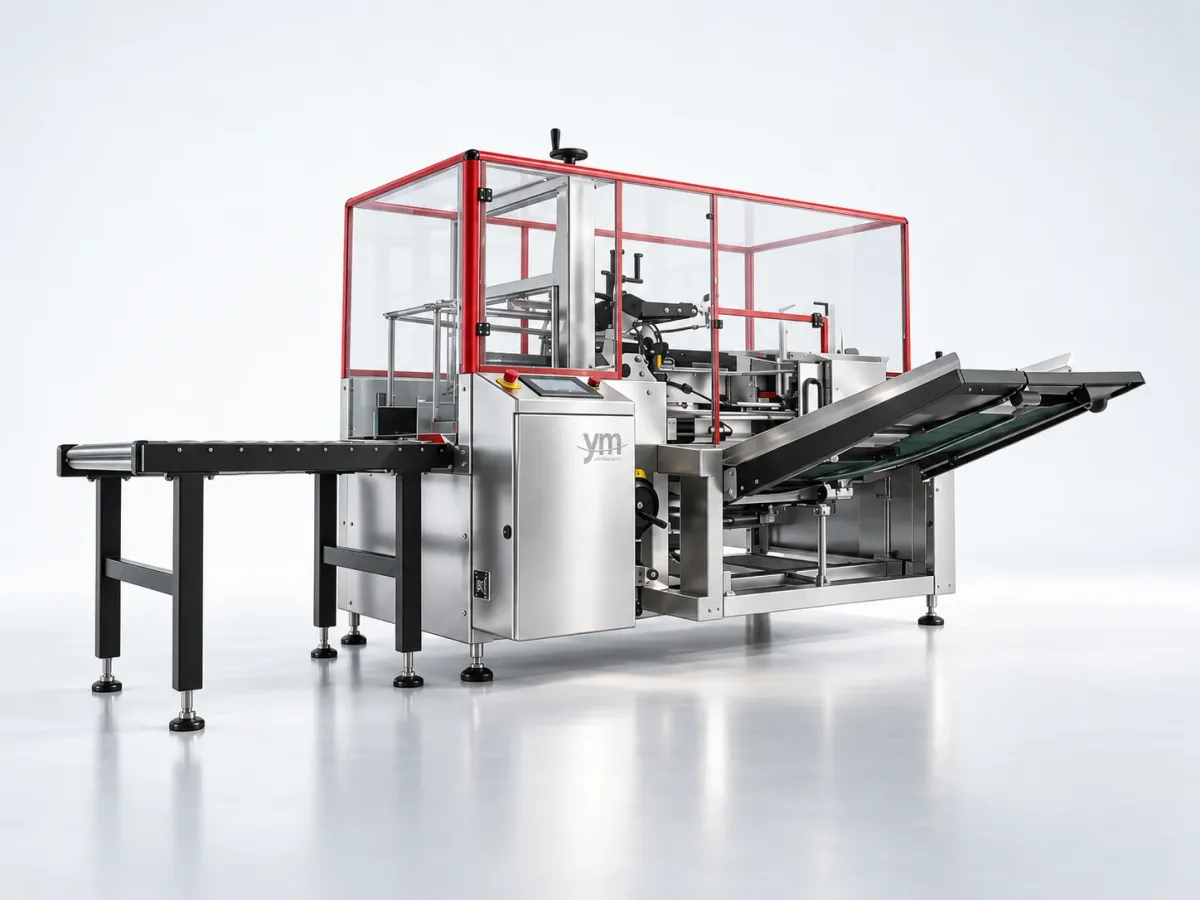
Which machines make secondary packaging. These are the case packing machines, working right after the packaging machine:
- Quality control comes before case packing: the metal detector and the checkweigher reject the packs that do not comply.
- The F2 case erector forms and tapes regular slotted cases automatically, up to 12 cases per minute, with a magazine for 80 blanks.
- The IB bag inserter forms a bag sized to the case from the reel and inserts it without wrinkles, for bulk product.
- The automatic case sealer folds the flaps and tapes the case top and bottom, up to 25 cases per minute.
This equipment makes up our secondary packaging machinery, the bridge between the packaging machine and the pallet.
Tertiary or transport packaging
Tertiary packaging, also called transport packaging, groups cases or packs into a unit load so it can be moved with a forklift, loaded onto the lorry and stored in the warehouse. The usual form is the pallet, above all the 1200 × 800 mm Euro pallet, with the cases placed in a stable pattern, stabilised with stretch film, strapping or corner boards, and carrying a logistics label that identifies the load and lets it be traced.
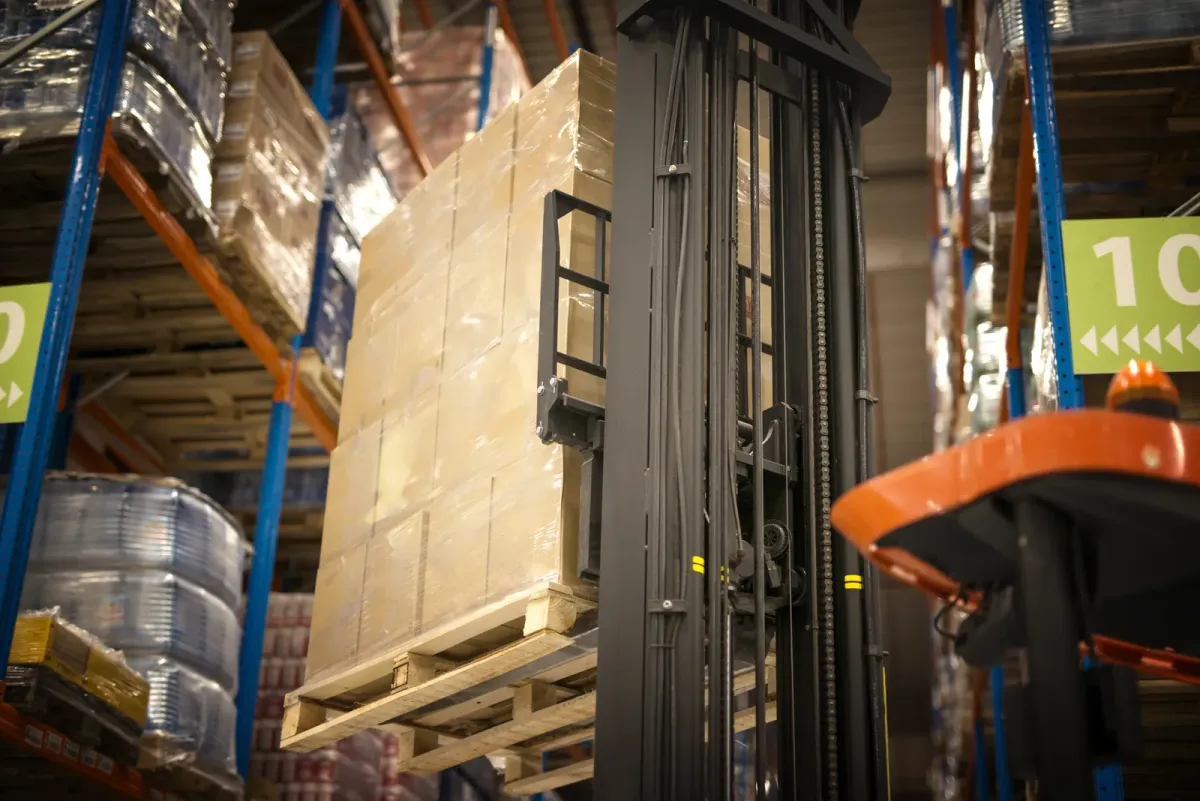
Examples of tertiary packaging:
- Pallet of coffee cases wrapped in stretch film.
- Pallet of flour or animal feed bags.
- Mixed pallet with cases of several products for one customer.
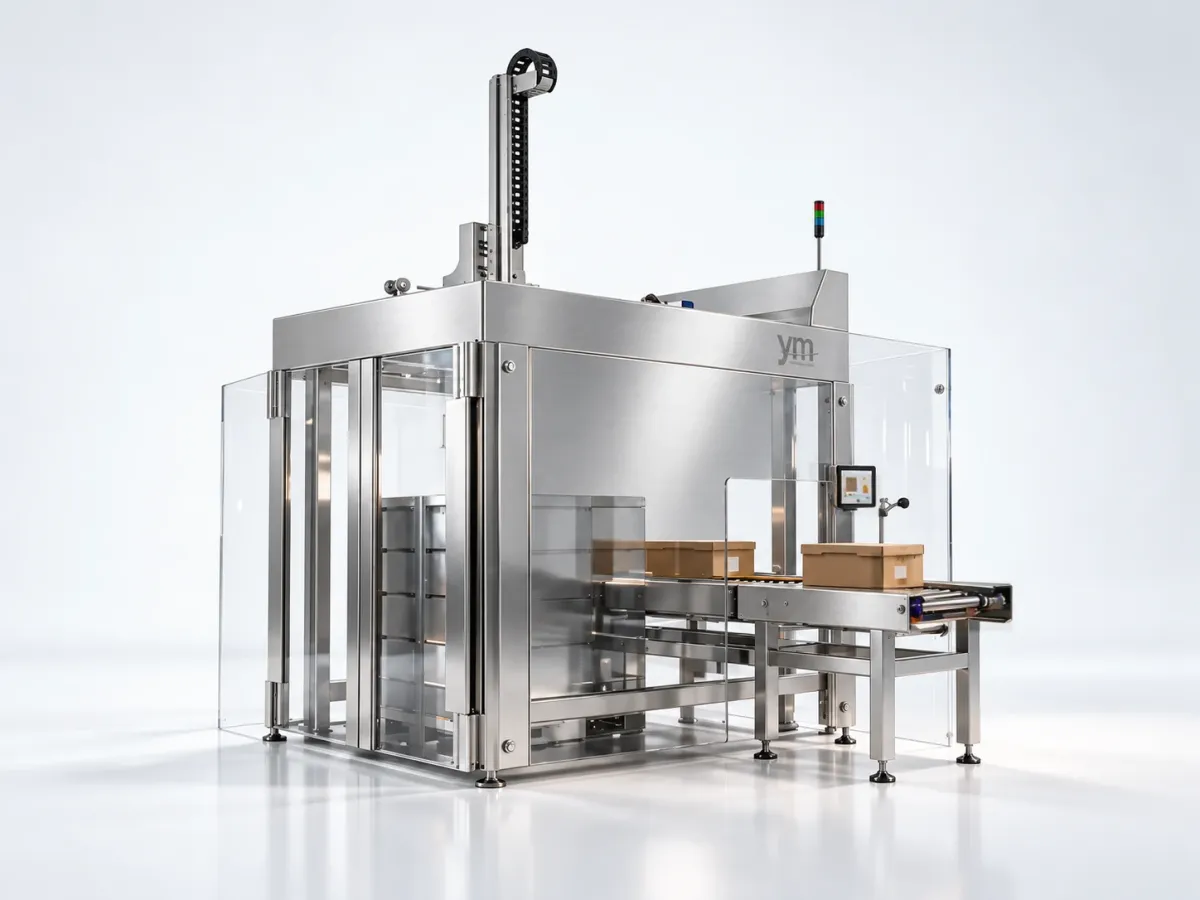
Which machines make tertiary packaging. The palletising machines, at the end of the line:
- The cartesian axis palletiser places regular cases in simple patterns, up to 10 cycles per minute, and takes up little space.
- The anthropomorphic palletising robot turns and orients each case for complex patterns, and can also depalletise and mix products.
- The collaborative robot palletises next to the operators and can work without a closed cage, depending on the risk assessment of each installation.
The pallet is then stabilised with film and labelled before it leaves the plant.
Comparison table of the types of packaging
| Type of packaging | Function | Examples | YM machine |
|---|---|---|---|
| Primary | Contains and protects the product; informs the consumer | Doypack, sachet, stick, flow pack, jar, large bag | Vertical, horizontal and flow wrapping machines; fillers; weighers |
| Secondary | Groups sales units; protects them in distribution | Cardboard case, display case, tray, multipack | Case erector, bag inserter, case sealer, checkweigher |
| Tertiary (transport) | Forms the unit load for transport and storage | Pallet with stretch film and logistics label | Cartesian palletiser, anthropomorphic robot, cobot |
How to choose packaging according to the product
The type of product decides the primary pack and how to dose it; the sales channel mainly decides the secondary and tertiary packaging.
- Powders (flour, ground coffee, protein, milk powder): need a tight pack with a barrier, such as the flat-bottom bag, the doypack with zipper, the stick or the jar. They are dosed with an auger, which measures the volume accurately and keeps dust under control.
- Granules and solids (snacks, nuts, pulses, sweets): pillow bag, doypack or flow pack, with a multihead weigher. If the product is fragile, it should drop from a low height.
- Liquids and semi-liquids (sauces, oils, detergents): doypack with spout, sachet, bottle or jerrycan, with a dosing pump and a leak-free seal.
- Fresh and frozen food: vacuum packing extends the shelf life of fresh food, as with the EPRV rotary vacuum machine; frozen food and ice go in bags made of cold-resistant film, pillow or flat-bottom. See the example of the ice packaging line.
For secondary and tertiary packaging, the destination rules: a display case for the supermarket shelf, larger cases for industry or the hospitality sector, and full or mixed pallets depending on the order. To see how the three levels fit into one installation, see the complete turnkey line or tell us about your product and we will propose the line.
Frequently asked questions
What is primary packaging?
It is the pack in direct contact with the product, the one the consumer buys and opens, such as a doypack pouch, a sachet, a jar or a flow pack. It is also called the sales pack.
What is tertiary or transport packaging?
It groups cases or packs into a unit load, usually a pallet stabilised with stretch film and carrying a logistics label, so it can be transported and stored with a forklift.
What is industrial packaging?
It is the set of packs and packaging used in industry to protect, group and transport goods, especially secondary packaging (cases, trays) and tertiary packaging (pallets). It is formed and closed by case packing and palletising machines at the end of the packaging line.
What is packaging for?
To protect and preserve the product, inform the consumer, group units for sale and handling, and transport and store the goods without damage or losses.
Which machines take part in each type of packaging?
For primary packaging, vertical, horizontal and flow wrapping machines and fillers. For secondary packaging, the case erector, the bag inserter, the case sealer and the checkweigher. For tertiary packaging, cartesian palletisers, anthropomorphic robots and cobots.