Sustainable packaging is packaging designed to reduce its environmental impact across its whole life cycle: it uses less material, it can be recycled, reused or composted, and it includes recycled material. In the food industry, the most common change is moving from multilayer films to recyclable mono-material films, and that means adjusting the packaging machine.
Almost everything published about sustainable packaging is written by bag manufacturers, brands or general media. Here we explain it from the machine's point of view: which materials you can use, what the law requires and, above all, what changes on your line when you switch to mono-material film, paper or compostable film.
What is sustainable packaging?
Sustainable packaging does the same job (protecting, preserving and selling the product) with less environmental impact. It is also called eco-friendly packaging or green packaging: the terms are synonyms and we use them interchangeably in this guide.
There are three levers to get there:
- Reduce: less material per pack, thinner films and no unnecessary empty space.
- Recycle: mono-material packs that enter a real recycling stream and that include recycled material.
- Reuse or compost: packaging that is used several times, such as pallets and cases, or materials certified for composting.
Why now? Because European and national rules already set dates and targets, because Spain has taxed non-recycled plastic since 2023, and because retailers and export customers increasingly ask their suppliers for recyclable packaging. Packaging sustainability has gone from a marketing argument to a purchasing requirement.
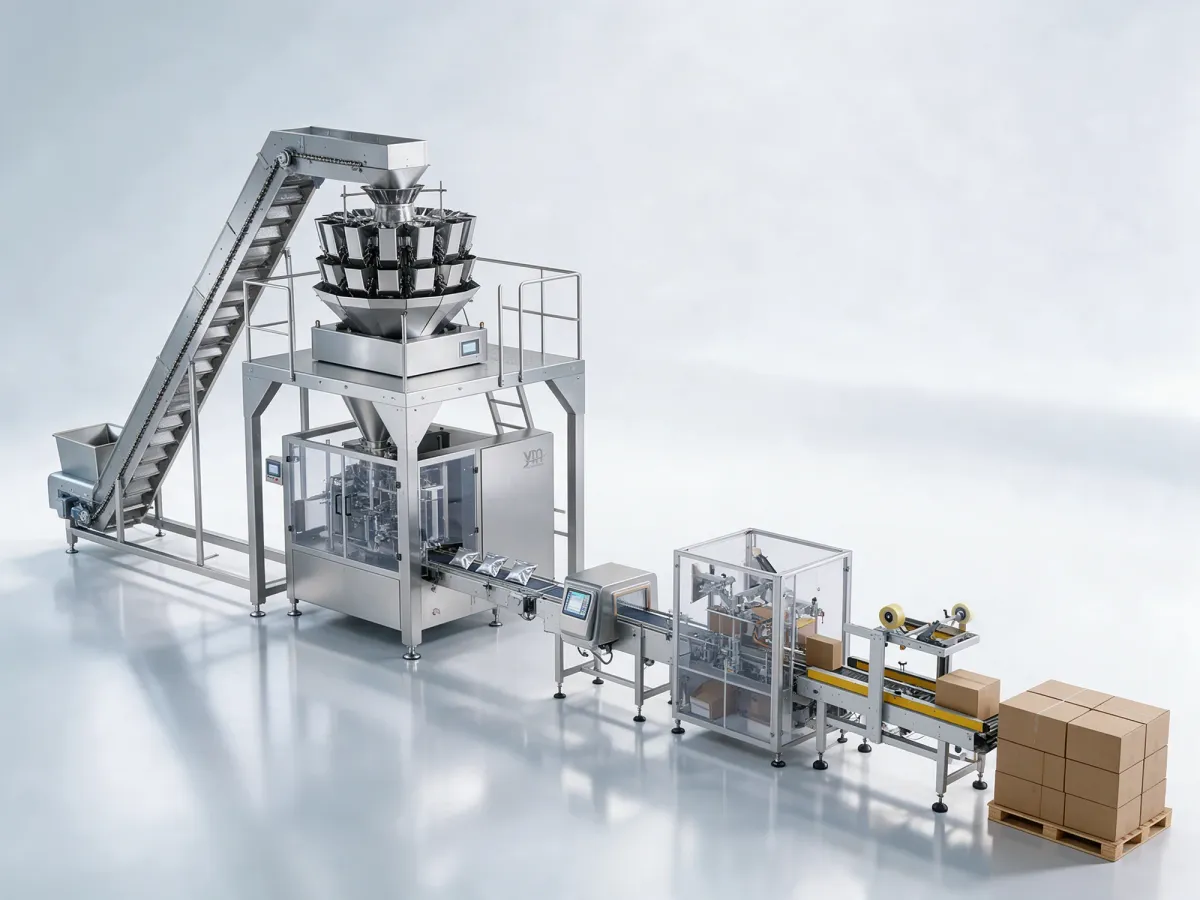
At YM Packaging Group, a Spanish manufacturer of packaging machinery and turnkey lines, we see the change from inside the line: every new material means adjustments to sealing, film transport and format. That is why this guide ends at the machine.
Sustainable packaging materials
There is no single sustainable material: it depends on the product, the barrier it needs and how the waste will be handled. These are the most widely used in food, and what they mean for the packaging machine.
| Material | Example | End of life | Advantage | What it means for the machine |
|---|---|---|---|---|
| Mono-material PE film | Snack or frozen food bag in PE/PE | Recyclable (PE stream) | Replaces OPP/PE laminates | Narrower sealing window: needs more precise temperature control |
| Mono-material PP film | Pasta or rice bag in PP/PP (BOPP/CPP) | Recyclable (PP stream) | Good barrier and gloss | Adjust sealing temperature, pressure and time |
| Heat-sealable paper | Sugar, flour or coffee bag in paper with a sealing layer | Recyclable with paper | Natural look, no visible plastic | Less elastic than film: check former, guiding and sealing |
| Compostable film (PLA, cellulose…) | Fresh produce or tea bag | Compostable (industrial or home, depending on certification) | Alternative to fossil plastic | Sensitive to humidity and temperature: test before production |
| Recycled material (rPET, rPE) | Trays, bundling film | Recyclable | Reduces the Spanish plastic tax | Material consistency can vary between batches |
Recyclable and mono-material packaging
Many bags today use laminates of two different plastics, such as OPP/PE or PET/PE, the same films our vertical packaging machines run. They perform very well in barrier and on the machine, but because they combine materials that cannot be separated, they are hard to recycle.
That is why the big trend in recyclable packaging is mono-material film: the whole bag in PE (PE/PE) or the whole bag in PP (PP/PP, for example BOPP/CPP). Being a single plastic, the pack enters its recycling stream. It is the change many brands are making in snacks, nuts, pasta, rice and frozen food.
Compostable and biodegradable bags
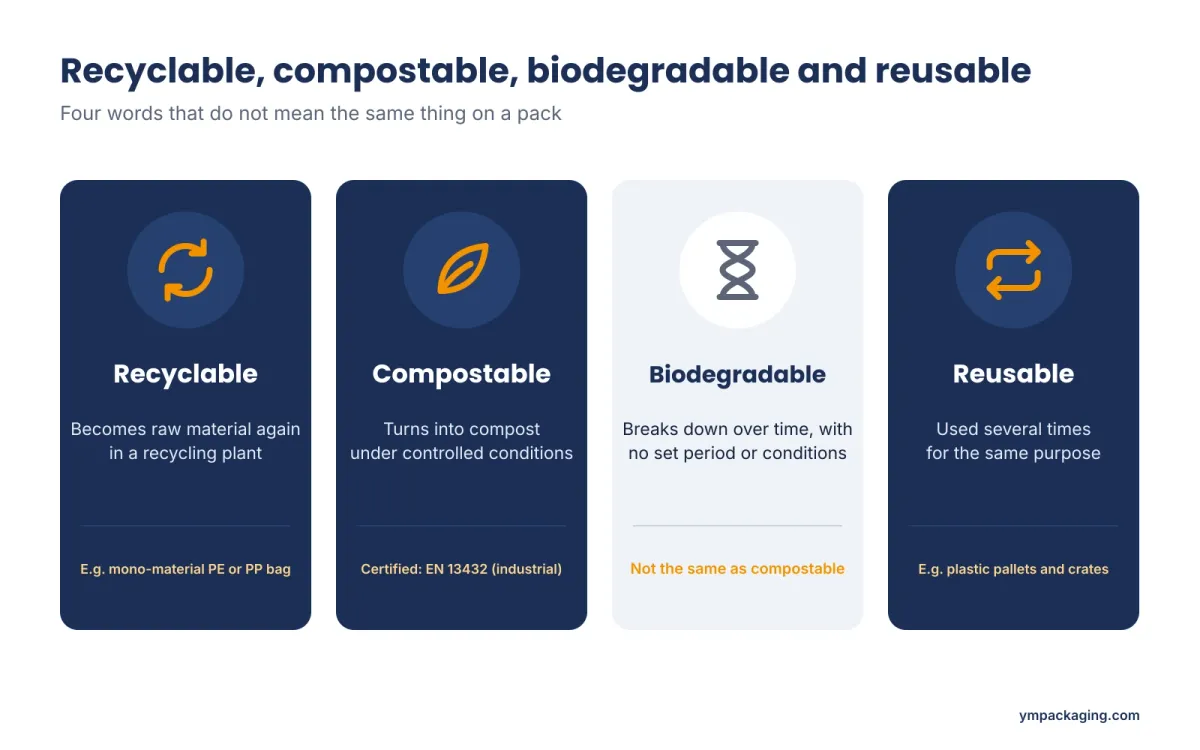
Compostable and biodegradable are not the same thing. Compostable bags turn into compost under controlled conditions and must be certified: EN 13432 is the reference standard for industrial composting, and there are also certifications for home composting. Compostable packaging makes most sense when the pack ends up with organic waste, as with tea or some fresh products.
Biodegradable packaging only means the material degrades over time, with no defined timeframe or conditions. Be wary of packaging sold as "biodegradable" with no certification behind it: it is not the same as compostable and can mislead consumers.
Paper and cardboard
Paper is coming back to primary packaging as paper bags with a heat-sealable layer, common for sugar, flour or coffee. They are recycled with paper and look natural, although paper is less elastic than film and needs different handling on the machine.
In secondary packaging, cardboard is still the reference material: grouping in a case instead of plastic film is one of the simplest ways to cut plastic. To review the three levels, see our guide to primary, secondary and tertiary packaging.
Examples of eco-friendly food packaging
These are some examples of eco-friendly packaging already in use in the food industry:
- Nuts and snacks in mono-material PE bags.
- Coffee in paper bags with a valve.
- Pulses and rice in recyclable PP bags.
- Sugar and flour in paper bags.
- Frozen food in mono-material PE.
- Grouping in cardboard cases instead of film, with case packing machines.
In all these cases eco-friendly packaging does not change the product, but it does change the material that goes into the packaging machine. If you already have a YM machine, we can also supply the packaging: see our packaging for customers service.
Packaging regulations in the EU and Spain
The pace is set by the European packaging regulation and, in Spain, by national rules on packaging waste and plastic.
Regulation (EU) 2025/40 (PPWR) entered into force on 11 February 2025 and has applied generally since 12 August 2026. Recyclability grades apply from 2030, and from 2035 packaging will have to be recycled "at scale" (European Circular Economy Stakeholder Platform). More detail in our PPWR guide.
In Spain, additionally, Royal Decree 1055/2022 sets recycling targets for packaging waste (65 % by weight of all packaging in 2025 and 70 % in 2030; 50 % and 55 % for plastic), according to MITECO, and Law 7/2022 has taxed non-recycled plastic in non-reusable packaging at €0.45 per kilo since 1 January 2023; certified recycled plastic is not taxed (Garrigues).
General information, not legal advice. Check the official text in force.
How to adapt your packaging machine to sustainable packaging
Switching to mono-material, paper or compostable film usually means adjusting sealing, film transport and speed. We recommend testing your material before changing production. These are the sustainable packaging solutions we review with every customer.
Sealing
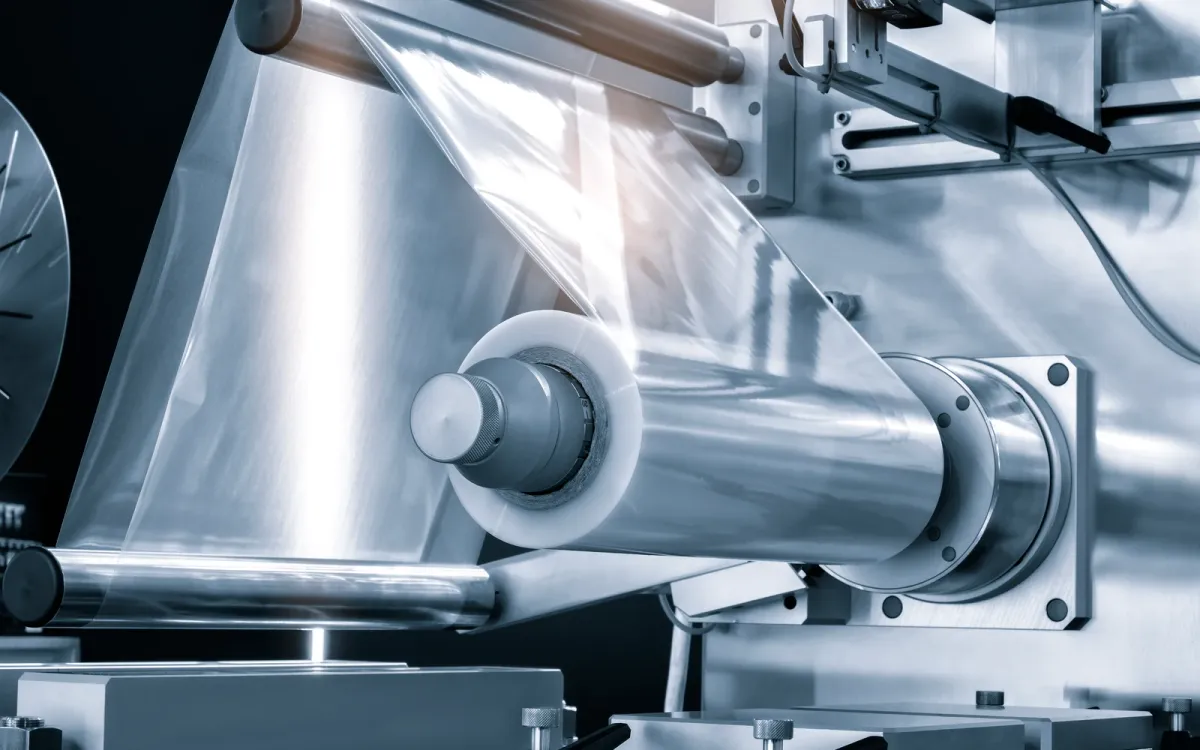
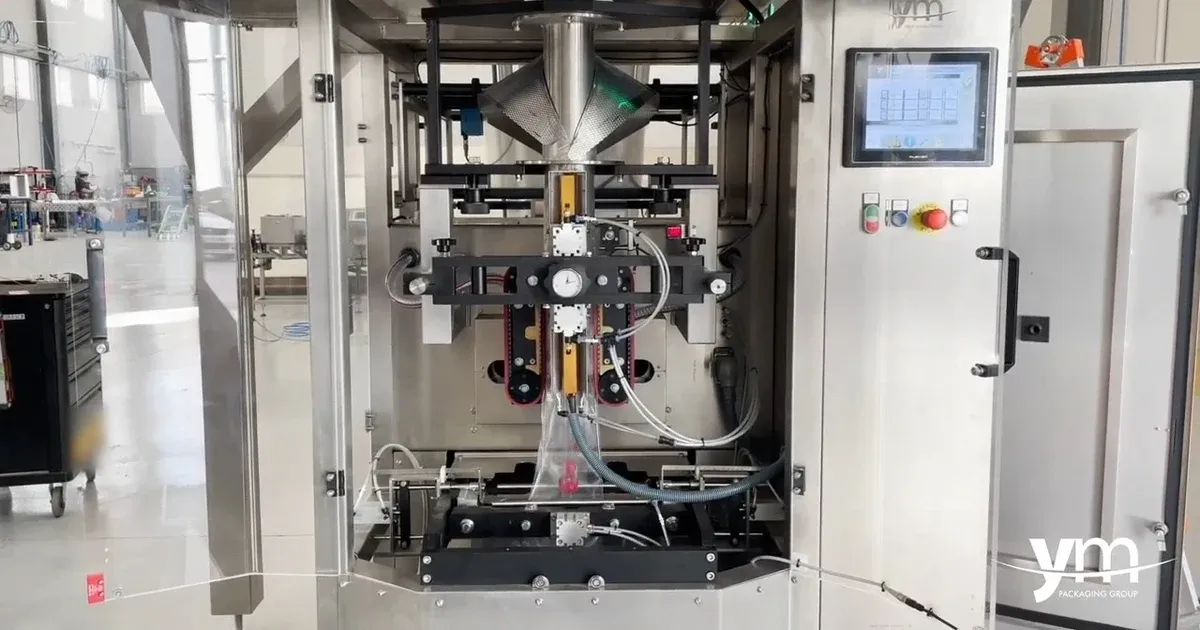
Mono-material films have a narrower sealing window than laminates, especially PE/PE: there is less margin between a temperature that does not seal and one that melts the film. That is why the precision of jaw temperature control, sealing pressure and sealing time matter. Our vertical packaging machines offer a special polyethylene sealing option. The change of material affects horizontal packaging machines and flow wrapping machines in the same way; for flow wrap, also review flow wrapping materials.
Format and reel
Sustainable films are often thinner, so tension control and reel guiding become more important to stop the film deforming or drifting. Also check that the format fits your machine: the VM vertical packaging machine handles bags from 80 to 480 mm wide with reels up to 1000 mm, and the VMI vertical packaging machine bags from 80 to 300 mm wide with reels up to 620 mm.
Speed and OEE
A new material can lower speed while it is being adjusted. Measure the change with OEE before and after: you will know whether the loss is temporary, while you fine-tune the settings, or whether the new film needs a different configuration.
Test your material before you switch
Send us your film and your product and we will assess the change with you: what adjustments your packaging machine needs and whether an option is worth adding. Request information.
| Point to check | What changes with mono-material, paper or compostable | What to check with the manufacturer |
|---|---|---|
| Sealing temperature | The sealing window is narrower (especially with PE/PE) | Precision of jaw temperature control |
| Sealing pressure and time | They change compared with the laminate | Whether the machine lets you set them per format or recipe |
| Jaw type | Some materials need a different profile or finish | Whether a specific sealing option exists (e.g. for polyethylene) |
| Film transport and tension | Thinner or more elastic films deform easily | Tension control and reel guiding |
| Former and tube | Paper is less flexible than film | A former suited to the material and bag width |
| Speed | It can drop at first while settings are adjusted | Measure OEE before and after the change |
Worked example. A snack maker packing in OPP/PE laminate film decides to switch to mono-material PE/PE so the bag is recyclable. On the vertical packaging machine, the change mainly affects sealing: the temperature window is narrower, so temperature, pressure and time must be adjusted, and it is worth checking whether a polyethylene-specific jaw makes sense. Film tension is also reviewed, because PE is more elastic. During the first runs speed may be slightly lower until the settings are fine-tuned, which is why it pays to test the film with the real product before the switch.
Benefits of sustainable packaging for manufacturers
Beyond complying with the law, switching to sustainable packaging brings direct benefits to whoever packs the product:
- Tax savings: in Spain, the special tax applies to non-recycled plastic, so using certified recycled plastic reduces the bill.
- Ready for 2030: the PPWR sets targets for 2030; adapting the pack and the line in time avoids rushed changes.
- Retail and export requirements: more and more retailers and overseas customers ask their suppliers for recyclable packaging.
- Brand image: a recyclable or paper pack shows the brand's commitment right on the shelf.
- Less material per pack: thinner films and bags sized to the product use less material.
Want to move to recyclable or compostable film?
Tell us about your material and your product and we will help you adapt your line. Request information.
Frequently asked questions
What is sustainable packaging?
It is packaging designed to reduce its environmental impact: it uses less material, it is recyclable, reusable or compostable, and it includes recycled material where possible.
What is the difference between recyclable, compostable and biodegradable packaging?
Recyclable packaging becomes new raw material at a recycling plant. Compostable packaging breaks down into compost under controlled conditions and must be certified (for example, to the EN 13432 standard for industrial composting). "Biodegradable" only means the material degrades over time, with no defined timeframe or conditions, so it is not the same as compostable.
What is mono-material packaging?
It is packaging made from a single type of material, for example a 100 % polyethylene (PE/PE) bag. Because it does not mix different plastics, it can be recycled in its own stream, unlike multilayer laminates such as OPP/PE or PET/PE.
Can I run mono-material or compostable film on my current packaging machine?
In many cases yes, by adjusting sealing (temperature, pressure and time) and film transport. It depends on the model and the material. We recommend testing your film with your product before changing production.
Which regulations apply to packaging in the EU and Spain?
Mainly Regulation (EU) 2025/40 on packaging (PPWR), applicable from 12 August 2026. In Spain, also Royal Decree 1055/2022 on packaging and packaging waste, and Law 7/2022, which created the special tax on non-reusable plastic packaging.
How much is the Spanish plastic packaging tax?
€0.45 per kilo of non-recycled plastic contained in non-reusable packaging, in force since 1 January 2023. Certified recycled plastic is not taxed.